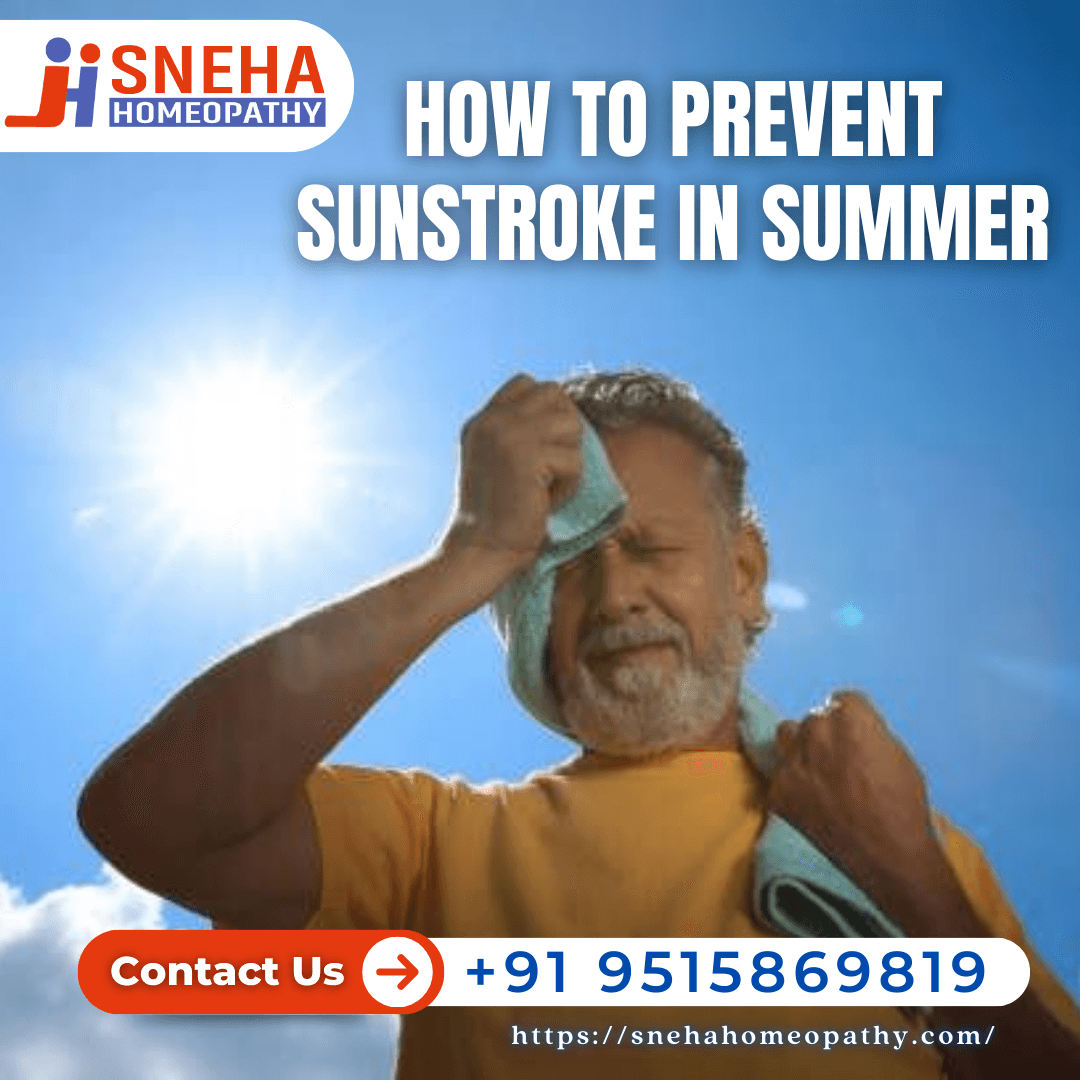
Sunstroke (heatstroke) is a life-threatening emergency occurring when the body overheats (typically
>104∘Fis greater than 104 raised to the composed with power F
>104∘F
or
40∘C40 raised to the composed with power C 40∘C
) due to prolonged sun/heat exposure, causing the temperature regulation system to fail. Symptoms include high body temperature, confusion, hot/dry skin, nausea, and rapid pulse. Prevention relies on hydration, wearing light clothing, and avoiding peak sun (11 a.m.–3 p.m.). Symptoms of Sunstroke
- Extreme Body Temperature: Core body temperature of 104∘F104 raised to the composed with power F 104∘F (40∘C40 raised to the composed with power C 40∘C ) or higher.
- Mental Status Changes: Confusion, agitation, slurred speech, delirium, or seizures.
- Skin Changes: Skin may feel hot and dry to the touch, or, in exercise-induced heatstroke, it may be profusely sweating.
- Physical Distress: Nausea, vomiting, rapid breathing, and headaches.
- Dizziness or Fainting: Feeling lightheaded or loss of consciousness.
How to Prevent Sunstroke
- Stay Hydrated: Drink plenty of fluids (water, ORS) throughout the day, even if not thirsty.
• Avoid Peak Hours: Limit outdoor activity between 11 a.m. and 4 p.m. when the sun is strongest.
- Dress Appropriately: Wear lightweight, light-colored, and loose-fitting clothing to allow body heat to escape.
- Use Sun Protection: Apply broad-spectrum sunscreen (SPF 30+) and wear hats or sunglasses.
- Acclimatize Gradually: Allow your body to adjust to warmer temperatures over several days.
- Never Leave Persons in Cars: Never leave children or pets in parked vehicles, even for a few minutes.
- Limit Alcohol/Caffeine: These substances can contribute to dehydration.
Immediate First Aid
If sunstroke is suspected, call for emergency medical services immediately. While waiting:
- Move to Shade/Cool Area: Get the person out of direct sun.
- Cool the Body: Spray with water, use ice packs on the neck, armpits, and groin, or place them in a cool shower.
- Remove Excess Clothing: Help the body release heat.
- Hydrate (If Conscious): Offer cool water or ORS, but do not force fluids on an unconscious person.
Some homeopathic remedies traditionally associated with symptoms related to sun exposure include:
- Belladonna: Used in homeopathy for symptoms characterized by sudden onset, intense heat, redness, and throbbing sensations.
- Glonoinum: Associated in homeopathy with symptoms like intense, pulsating headaches, often described as bursting, and feelings of confusion or disorientation, particularly after sun exposure.
- Natrum carbonicum: In homeopathy, this remedy is considered for symptoms such as headaches, weakness, and fatigue that may result from prolonged exposure to the sun.
- Aconitum napellus: Used homeopathically for symptoms that appear suddenly, including feelings of fear or anxiety, and a rapid increase in body temperature.
- Camphora: In homeopathy, this remedy is sometimes considered for symptoms like coldness, collapse, or shock.
- Apis mellifica: Associated in homeopathy with burning and stinging sensations, especially if accompanied by swelling or hives.